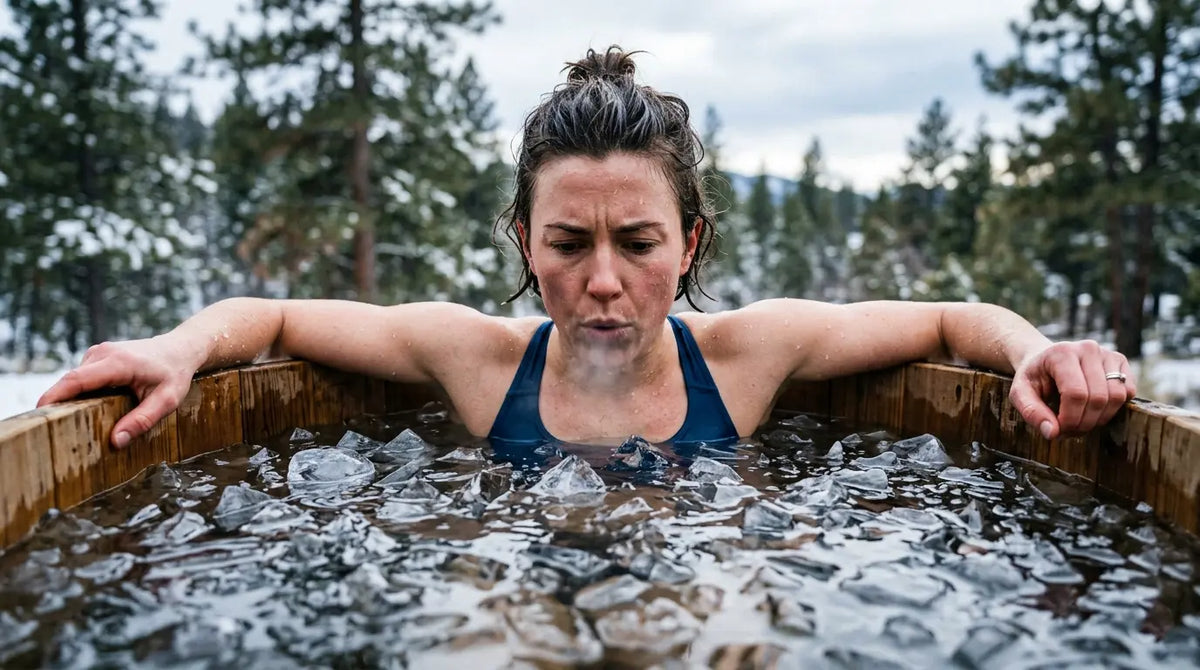
Cold water immersion appears to be effective for a variety of reasons, including Andrew Huberman neuroscience research showing an increase (250%) in dopamine and a spike (530%) in norepinephrine following cold plunges. These effects last for many hours.
However, on the flip side, the American Heart Association (AHA) warns that the sudden shock of cold water can cause fatal cardiac events within seconds. Cleveland Clinic physicians recommend heart patients completely avoid cold immersion therapy. In 2023, several drowning deaths have been reported in connection to unmonitored cold plunge therapies.
Which of the above statements is correct? The answer is both, depending upon who you are and how you choose to engage in cold water therapy.

What Happens to Your Body the Moment You Enter Cold Water
Before weighing the risks, it helps to understand the sequence of events your body runs through every time you step into an ice bath. Three things happen, roughly in order.
Cold Shock Response — the highest-risk window
The instant cold water hits your skin, your autonomic nervous system triggers a stress response. Heart rate, blood pressure, and breathing rate all spike within seconds. More critically, you'll experience an involuntary gasping reflex — an uncontrollable urge to take a sharp, deep breath.
If your head is above water, that gasp is merely startling. If your face is submerged, it can pull water into your lungs. The American Heart Association identifies this window — the first 10 to 60 seconds — as the period of greatest danger.
Vasoconstriction — blood retreats inward
As the cold shock response fades, blood vessels near the skin and in the limbs constrict sharply. Blood gets redirected to protect the brain and vital organs. Your arms and legs lose circulation, muscle strength drops, and coordination deteriorates. The longer you stay in, the harder it becomes to move with any precision — which matters a great deal when it's time to climb out.
Thermoregulatory stress — heat leaves fast
Water conducts heat roughly 25 times more efficiently than air. At 10–15°C (50–59°F), your core temperature can start falling within minutes. The dangerous part: the drop doesn't stop when you step out. Residual cooling can continue for 20–30 minutes after you leave the water, which is why post-bath monitoring matters as much as what happens inside it.

Six Real Risks of Ice Baths
Each risk below is assessed on available evidence — not worst-case scenarios, not dismissals.
Cardiovascular Stress
Cold shock drives a rapid surge in heart rate and blood pressure. For healthy adults, the body handles this without incident. For anyone with an existing cardiac condition, the story changes. Research has found that prolonged cold water immersion can elevate troponin — a protein released when heart muscle is under stress or injured.
⚠️ Risk level: HIGH for cardiac patients. The American Heart Association explicitly advises people with heart disease, hypertension, or arrhythmia to avoid cold water immersion. For healthy individuals, the cardiovascular load is significant but manageable with proper precautions.
Hypothermia
The CDC flags water cooler than 70°F (21°C) as hypothermia territory. At the typical ice bath temperature of 50–59°F, the progression can be fast: uncontrollable shivering gives way to mental confusion, then impaired movement, then loss of consciousness. Most recreational ice bathers don't push anywhere near this point — but extended sessions or very cold water (below 10°C) carry real risk, especially without supervision.
Drowning and Physical Injury
This is the risk people underestimate most. The gasping reflex at entry is one threat. Numb, uncooperative limbs are another. By minute five in cold water, the fine motor control needed to grip a handle or swing a leg over the side of a tub is meaningfully impaired. Several documented fatalities have involved people who entered cold water alone and could not exit.
A separate hazard applies to the popular DIY option of repurposing a chest freezer: metal, electricity, and water form a combination that has caused electrocution deaths.
Respiratory Complications
For people with asthma or reactive airways, cold air drawn in during the gasping response can trigger bronchospasm — sudden, severe airway tightening. Even in healthy individuals, the hyperventilation that follows cold shock can cause lightheadedness or brief loss of consciousness. This is especially dangerous if it happens before you've steadied yourself in the tub.

Frostbite and Skin Damage
At standard ice bath temperatures with normal session lengths, frostbite is not a realistic risk for most people. The exception is anyone with Raynaud's disease, a condition in which cold triggers intense vasospasm in the fingers and toes, turning them white or blue and sometimes causing lasting tissue damage. For this group, even brief cold exposure can cause injury.
Interference with Muscle Growth
This is the risk most relevant to strength athletes, and it's supported by solid research. Muscle growth requires inflammation — it's the signal that tells the body to rebuild fibers thicker and stronger. Ice baths blunt that inflammatory response.
A meta-analysis covering ten studies found that ice baths after resistance training measurably reduced strength and hypertrophy gains over time. A widely cited study from Maastricht University confirmed the mechanism: cold immersion after lifting suppresses the satellite cell activity that drives muscle repair.
✓ The exception: Cold water immersion does not appear to impair aerobic adaptations. If your goal is endurance performance or short-term recovery between training sessions rather than building mass, the risk does not apply.


Who Should Avoid Ice Baths Entirely
For most healthy adults, ice baths are a manageable risk. For the following groups, the risk-to-reward ratio tips sharply against it.
|
Group |
Why the risk is elevated |
|
Heart disease / arrhythmia / hypertension |
Cold shock can trigger acute cardiac events; AHA advises against it |
|
Pregnant women |
Sudden core temperature change affects placental blood flow |
|
Children under 12 / adults over 65 |
Thermoregulatory capacity is reduced; core temp drops faster |
|
Raynaud's disease |
Cold triggers vasospasm that can cause lasting tissue damage |
|
Diabetics with peripheral neuropathy |
Nerve damage removes the warning signals for frostbite injury |
|
Asthma / chronic lung disease |
Cold air triggers bronchospasm during the gasping reflex |
|
Open wounds / acute tears |
Cold masks pain signals; infection and re-injury risk rises |
Note: If you fall into any of these categories, consult a physician before attempting cold water immersion — including milder forms like cold showers.
The Science-Backed Benefits (What Cold Actually Does Well)
Ice baths are not all downside. For the right person with the right goal, the evidence is reasonably strong.
Faster Recovery from High-Intensity Training
Cold water immersion (CWI) is an effect technique for reducing both muscle (DOMS) and swelling 24–48 hours after strenuous physical activity
Studies show that 10 to 15 minutes in 10 to 15 degrees Celsius was the best recovery option to receive benefit for an endurance athlete without significant downside.
The only caution is that the anti-inflammatory properties of ice and CWI will also inhibit the muscle-building signal for those who are focused on hypertrophy; therefore, to maximize hypertrophy, use CWI strategically, not usually.
Neurochemical and Mental Health Effects
Cold water immersion triggers a sharp, sustained release of dopamine and norepinephrine. In Huberman Lab's research, dopamine rose 250% above baseline and norepinephrine rose 530%, with both remaining elevated for two to three hours. These are not trivial numbers — they exceed what most legal stimulants produce.
A controlled trial found that 59% of participants reported a measurable reduction in depressive symptoms after regular cold immersion. Researchers at the University of Portsmouth have proposed cold water swimming as a potential adjunct treatment for depression and anxiety. The mechanism — a controlled acute stressor that resets the autonomic nervous system — is biologically plausible.
Research note: Most studies in this area are small and short-term. The neurochemical effects are real; their long-term clinical significance for mental health has not yet been established in large randomized trials.
Metabolic and Immune Effects (Preliminary)
Cold exposure activates brown adipose tissue (BAT), the metabolically active fat that burns calories to generate heat. Regular cold exposure appears to increase BAT density over time, which may improve insulin sensitivity and baseline metabolic rate. Studies also show reductions in inflammatory markers after consistent cold exposure.
These effects are real in the lab. Whether they translate to meaningful clinical outcomes at realistic ice bath doses remains an open question.

How to Reduce the Danger of Ice Baths
The risks outlined above are not arguments against ice baths. They are arguments for doing them correctly. Here is a practical framework built from sports medicine guidelines and the cold water immersion research literature.
Before You Start: Screen Yourself
Run through the contraindications in Section 3. If any apply, stop and talk to a doctor first. If you're healthy but new to cold immersion, get a basic cardiovascular check before beginning a regular practice — not because the risk is high, but because knowing your baseline heart rate and blood pressure gives you a reference point.
Temperature and Time
- Start at 18–20°C (64–68°F). This is cool enough to feel challenging without the full cold shock response.
- Target range for experienced users: 10–15°C (50–59°F).
- Session length: 2–3 minutes for beginners. Work up to a maximum of 10–15 minutes.
- Weekly dose: Research by Dr. Susanna Soberg suggests that 11 minutes total per week — spread across 2–4 sessions — is sufficient to produce metabolic and neurochemical benefits.
Entry: Manage the Cold Shock
The first 60 seconds are the highest-risk period. How you enter the water largely determines whether that risk materializes.
- Never enter alone. Always have someone nearby who can help you out.
- Enter slowly: feet and calves first. Pause 10–15 seconds. Then lower to the waist. Pause again. Only then submerge the torso.
- Keep your face and head above water for the entire session, especially early on.
- Keep your wrists above the waterline — this slows how quickly fine motor control degrades.
- Breathe through your nose. Focus on extending the exhale. Do not hold your breath.
During the Session: Know What to Ignore and What to Heed
Normal sensations you can push through:
- Stinging or burning skin sensation
- Mild shivering
- Skin redness
Exit the water immediately if you experience:
- Chest tightness, palpitations, or an irregular heartbeat
- Dizziness, confusion, or difficulty tracking your surroundings
- Fingers or toes turning white or blue
- Shivering that escalates sharply — or that suddenly stops
Set a timer. Do not rely on how you feel to judge elapsed time. Cold numbs perception as reliably as it numbs skin.
After: Rewarming Matters as Much as the Bath Itself
The residual cooling effect means the session isn't over when you step out.
- Remove wet clothing immediately. Wet fabric continues pulling heat from the body.
- Dry off and get into warm, dry layers.
- Move — light activity like walking or bodyweight squats drives blood back to the limbs and accelerates rewarming more effectively than standing still.
- Drink something warm and non-alcoholic. Alcohol dilates blood vessels and accelerates heat loss.
- Avoid jumping straight into a hot shower or sauna. The blood pressure swing from cold to heat can cause dizziness or fainting.
- Stay aware for 30 minutes. Delayed hypothermia symptoms can develop after you feel like you've recovered.
Equipment: One Hard Rule
Do not use a repurposed chest freezer as an ice bath. Chest freezers are not designed for occupied use, their drainage is often inadequate, and the combination of metal, electrical components, and water has caused electrocution fatalities. Use a purpose-built cold plunge tub or a standard bathtub filled with cold water and ice.
Strategic Timing Based on Your Goal
|
Goal |
Best timing |
Duration |
Frequency |
|
Strength / hypertrophy |
24–48 hrs post-training |
10 min |
1–2x / week |
|
Acute recovery (aerobic) |
Within 1 hr post-training |
10–15 min |
As needed |
|
Mental health / mood |
Morning, fasted preferred |
2–3 min |
3–4x / week |
|
Endurance adaptation |
Within 1 hr post-training |
10–15 min |
As needed |
The Bottom Line
Are ice baths dangerous? For most healthy adults who follow basic precautions, the answer is no — not more dangerous than a vigorous run or a heavy lifting session. For people with cardiac conditions, Raynaud's disease, respiratory disorders, or other contraindications listed above, the answer is yes — meaningfully and potentially seriously so.
Before you try it: Check whether you're in a high-risk group. When you try it: Start warm, enter slowly, never go alone. After you try it: Rewarm actively, watch for delayed symptoms.
If you have any pre-existing conditions, consult a physician before starting cold water immersion — even at mild temperatures. That's not excessive caution. It's just how you make sure the tool works for you.


