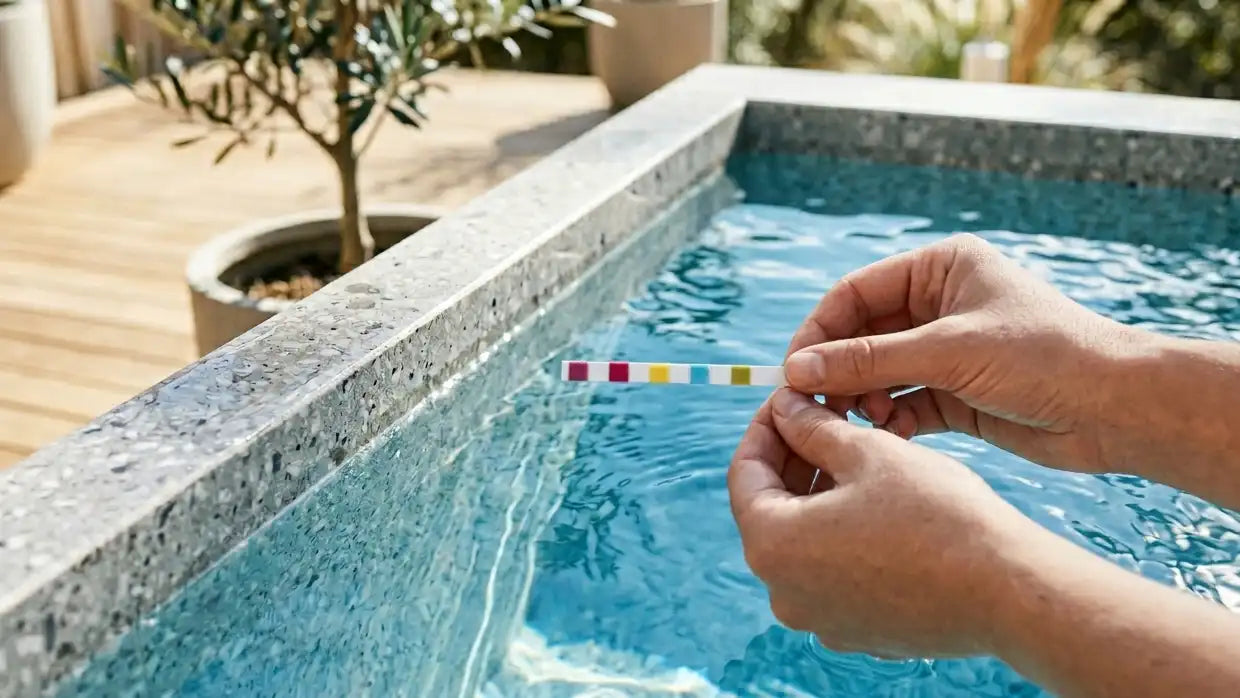
You invest time, money, and willpower into cold plunging. The last thing you want is to step into water that's gone cloudy, smells off, or — worse — harbors bacteria you can't see. Cold water doesn't clean itself. It slows bacterial growth, sure, but it doesn't stop it. Without a consistent maintenance routine, even a well-built tub can become a health hazard within days of use. This guide covers everything you need to know about how to keep cold plunge water clean: from daily habits that take 30 seconds to a full troubleshooting playbook when something goes wrong.
Why Clean Water Matters More Than You Think
There's a widespread assumption that cold water is self-sanitizing. It isn't.
Cold temperatures do suppress microbial growth — but they don't eliminate bacteria, fungi, or biofilm. Body oils, skin cells, sweat, and traces of shampoo or lotion enter the water every time you plunge. Over time, these organics accumulate, react with the water chemistry, and create conditions where pathogens can thrive — even at 50°F.
The health consequences range from minor to serious:
- Skin irritation and folliculitis — a rash caused by Pseudomonas aeruginosa, a bacteria that thrives in warm-to-cool water environments
- Eye and ear infections — particularly relevant if you submerge your head
- Fungal infections — mold and fungi can colonize tub surfaces and plumbing lines
Beyond health, dirty water damages equipment. A filter clogged with organic debris forces your pump to work harder. Scale buildup inside chiller lines reduces cooling efficiency. Neglecting water quality doesn't just affect your health — it shortens the lifespan of the entire setup.
If you want to understand the full range of benefits cold plunging can offer your body, clean water is the baseline that makes all of them possible. You can't get the recovery benefits from water you shouldn't be sitting in.

pH Testing and Water Testing Fundamentals
You can't manage what you don't measure. Water testing is the foundation of everything else in this guide.
What to Test
There are four parameters that matter most for a home cold plunge:
| Parameter | Target Range | Why It Matters |
|---|---|---|
| pH | 7.2 – 7.8 | Controls sanitizer effectiveness and skin comfort |
| Total Alkalinity | 80 – 120 ppm | Stabilizes pH, prevents sudden swings |
| Sanitizer (Free Chlorine) | 1 – 3 ppm | Kills bacteria and breaks down organics |
| Sanitizer (Bromine) | 3 – 5 ppm | Alternative to chlorine, more stable in cold water |
| Calcium Hardness | 100 – 250 ppm | Prevents corrosion and scale on metal parts |
pH is the most important number to watch. When it drifts below 7.2, water becomes acidic — it can irritate skin and corrode metal fittings. Above 7.8, chlorine loses effectiveness rapidly, even if the concentration reads fine on a test strip.
Testing Methods
Test strips are the most practical option for home use. Dip for 15 seconds, match the color to the chart. They're not perfectly precise, but they're accurate enough for routine monitoring.
Liquid test kits are more accurate and worth using when something seems off — cloudy water, unusual smell, or after a period of heavy use.
How Often to Test
- Every 1–2 weeks under normal use
- Every time you change the water
- Immediately if the water looks off, smells strange, or feels slippery
Quick warning signs that mean test now:
- Milky or cloudy water — usually a sanitizer or filtration issue
- Strong chlorine smell — often means chloramines, not excess chlorine
- Slippery or slimy tub walls — early biofilm
- Green tint — algae beginning to form

Sanitizer Options
Sanitizers do the work that filtration can't: they kill bacteria and break down the organic waste in your water. There are three main options for home cold plunges.
Chlorine
The most widely available and least expensive option. Chlorine works well, but cold water slows its reaction speed — it takes longer to work than it would in a heated pool. It also produces chloramines (combined chlorine) when it reacts with body oils and sweat, which causes the familiar "pool smell" and eye irritation.
Best for: Budget-conscious users who test regularly and don't mind the maintenance overhead.
Bromine
More stable in cold water than chlorine, and better suited for people with sensitive skin. Bromine doesn't off-gas as aggressively, which means less smell. It also stays effective over a wider pH range, making it more forgiving if your chemistry drifts slightly.
Best for: Sensitive skin, or users who want more consistent results with less precise monitoring.
Food-Grade Hydrogen Peroxide (H₂O₂)
A popular choice among DIY cold plunge users. It breaks down into water and oxygen, leaving no residue or smell. It's effective against bacteria and algae. The main drawback: it degrades faster than chlorine or bromine, so it requires more frequent top-ups.
Best for: Users who want to avoid chemical residue, or those using a basic tub without a filtration system.
Quick Comparison
| Sanitizer | Cold Water Stability | Skin Sensitivity | Residue | Frequency |
|---|---|---|---|---|
| Chlorine | Moderate | Can irritate | Low | Weekly |
| Bromine | High | Gentle | Very low | Every 1–2 weeks |
| H₂O₂ | Low | Very gentle | None | 2–3x per week |
Dosing tip: Cold plunge tubs hold 80–150 gallons — far less than a typical pool. Even a small overdose concentrates quickly. Start with half the recommended dose, test, and adjust. It's much easier to add more than to dilute an overdose.
If your setup includes an ozone generator or UV system, you'll need significantly less chemical sanitizer. These systems handle a large portion of the microbial load, so your chemical top-ups become more of a backup than a primary defense.
Recommended Products


Filtration Systems and Filter Maintenance
Sanitizers kill microorganisms. Filters remove the physical debris — skin cells, hair, body oils, and fine particles — that accumulate with every use. These two systems work together, and one without the other is a half-measure.
Types of Filters
Cartridge filters are the most common for home setups. They trap particles down to 20–25 microns, are easy to remove and rinse, and fit most tubs and chiller units. IceDragon chillers, for instance, use NSF-certified 20-micron cartridge filters that keep water clear for 2–4 weeks between cleanings.
Sponge/foam filters are used in simpler DIY setups. Less effective than cartridge filters for fine particles, but cheap and easy to clean.
Sand filters are better suited to larger commercial setups or high-volume shared tubs. Overkill for a single-person home plunge.
Advanced Options: Ozone and UV
- Ozone generators inject ozone gas into the water, which is one of the most powerful oxidizing agents available. It kills bacteria, breaks down organics, and reduces the chemical load needed to maintain water quality.
- UV systems expose water to ultraviolet light as it passes through the plumbing line, deactivating bacteria and algae at the DNA level.
Both options work best as complements to a primary sanitizer, not replacements. Cold water reduces how quickly ozone dissipates, which is an advantage — it stays active longer.
Filter Maintenance Schedule
- Every use: Skim visible debris from the surface before running the pump
- Every 1–2 weeks: Remove the cartridge filter, rinse with clean tap water and a soft brush; do not use soap
- Replace the filter only when you see visible damage, deformation, or when rinsing no longer restores normal flow
- Run circulation for at least 4 hours per day to keep water moving through the filter
A clogged filter doesn't just fail to clean — it restricts water flow to your chiller, which forces the motor to work harder and reduces cooling efficiency.

Water Change Frequency & Proper Methods
No matter how good your filtration and sanitizer routine is, total dissolved solids (TDS) build up over time. This is the accumulated load of minerals, organic compounds, and chemical byproducts that a filter can't remove and a sanitizer can't break down. The only solution is a full water change.
How Often to Change the Water
There's no single correct answer — it depends on your setup and usage pattern.
| Setup | Usage | Recommended Change Interval |
|---|---|---|
| No filter, no sanitizer | 1 person, daily | Every 3–5 days |
| Basic filter, H₂O₂ | 1 person, daily | Every 2–3 weeks |
| Filter + chlorine/bromine | 1 person, 4–5x/week | Every 4–6 weeks |
| Ozone or UV + filter + sanitizer | 1 person, daily | Every 6–8 weeks |
| Any setup | Multiple users daily | Every 1–2 weeks |
When to change regardless of schedule:
- Water is visibly cloudy and doesn't clear within 24 hours after shocking
- Persistent odor after treatment
- TDS reading above 1,500 ppm (if you have a TDS meter)
- Green or brown tint that doesn't respond to treatment
How to Change the Water Properly
Don't just drain and refill. Use each water change as a deep clean.
- Drain completely
- Scrub the interior walls with a soft cloth and mild cleaner — this removes the biofilm layer that forms on surfaces over time
- Rinse thoroughly to remove all cleaning product residue
- Refill with fresh water — a hose filter helps reduce incoming minerals and chlorine from tap water
- Add your sanitizer and balance pH before use
- Run the circulation system for 1 hour before plunging
That scrubbing step is the one most people skip. Biofilm doesn't rinse away on its own — it has to be physically disrupted.
Chiller and Equipment Care
The chiller is what separates a cold plunge from a lukewarm bath. It also does the most mechanical work of any component in your setup, which means it needs regular attention.
For a full overview of chiller options for home use, the IceDragon water chiller collection covers models from 1/3 HP entry-level units to 1.5 HP Wi-Fi-enabled systems.
Routine Chiller Maintenance
Weekly:
- Check the intake screen/filter for lint and debris
- Verify the chiller is reaching and holding your target temperature
- Confirm water flow is unrestricted (no kinks in hoses)
Monthly:
- Inspect hose connections for leaks or wear
- Check that ventilation clearance is maintained — most residential chillers need at least 6 inches of clearance on all sides
- Listen for unusual noise (grinding or loud vibration can indicate a pump or fan issue)
Periodically:
- Check calcium hardness in your water. Soft water is corrosive to metal heat exchanger components; hard water causes scale buildup inside the lines. Keeping calcium hardness in the 100–250 ppm range protects internal parts.
- If you notice reduced cooling speed, the refrigerant lines or heat exchanger may need professional service
Long-term Storage
If you're not using the plunge for two weeks or more, drain the tub completely, dry the interior, and power down the chiller. Leaving stagnant water in a sealed tub — even cold stagnant water — accelerates biofilm and bacterial growth significantly.

Using a Cover
If there's one single habit that has a disproportionate impact on water quality, it's using a cover consistently. It takes three seconds and solves a long list of problems.
What a Cover Actually Does
- Blocks airborne debris — dust, pollen, pet hair, insects. Outdoor setups are especially vulnerable; a single evening without a cover can introduce enough debris to overwhelm a filter.
- Reduces UV exposure — sunlight degrades chlorine and bromine residuals rapidly. An uncovered outdoor plunge in direct sun can lose most of its sanitizer in a few hours.
- Slows evaporation — relevant primarily in warm, dry climates
- Prevents algae growth — algae needs light to grow. A cover cuts off one of its two requirements (the other being nutrients from organic contamination)
Insulated vs Basic Covers
An insulated cover serves double duty: it protects water quality and maintains water temperature, reducing the workload on your chiller. For most home setups, an insulated cover pays for itself quickly in energy savings.
A basic cover (fitted tarp or foam pad) does the job for water quality purposes but won't meaningfully insulate.
The Habit That Matters Most
Cover your plunge immediately after every session. Not when you get around to it — immediately. The longer the water is exposed, the more airborne contamination enters, and the faster your sanitizer depletes.
Maintenance Schedule
All the information above only works if it's organized into an actual routine. Here's a practical schedule that covers all the bases without turning maintenance into a part-time job.
| Frequency | Action |
|---|---|
| Before every plunge | Rinse off / shower; wipe feet before entering |
| After every plunge | Skim surface debris; replace cover immediately |
| Weekly | Test pH and sanitizer levels; adjust as needed; rinse filter if usage is heavy |
| Every 2–4 weeks | Full water change + deep clean tub interior + inspect filter cartridge |
| Monthly | Check chiller intake screen; inspect hose fittings; verify ventilation clearance; listen for unusual noise |
| Seasonally | Full system inspection; check for UV damage on tub material; winterization if applicable |
The 80/20 of water maintenance: Consistent pre-plunge rinsing, daily cover use, and weekly chemistry testing handle the vast majority of problems before they start. The deep cleans and equipment checks are your safety net.
Quick Troubleshooting Reference
| Symptom | Most Likely Cause | First Action |
|---|---|---|
| Cloudy water | Low sanitizer / dirty filter | Test → adjust → clean filter |
| Strong chlorine smell | Chloramines (low free chlorine) | Shock treat |
| Green tint | Algae growth | Shock + scrub + change water |
| Slimy walls | Biofilm | Drain + physical scrub |
| Persistent odor after treatment | High TDS | Full water change |
| Skin irritation | pH imbalance | Test and balance pH |
Summary
Keeping a cold plunge clean comes down to a few consistent habits rather than any single product or trick. Test your water regularly, match your sanitizer choice to your usage pattern, run your filter daily, and change the water on a schedule that reflects how often you use the tub. Use a cover every time. Rinse off before you get in. When problems appear — and they will — the troubleshooting framework above covers most scenarios. A well-maintained cold plunge is cleaner to use and cheaper to operate; the time investment per week is under 10 minutes once the routine is established.
FAQ
How do I keep cold plunge water clean without chemicals?
The closest chemical-free approach combines frequent water changes (every 3–5 days), a UV sanitizer system, a quality filter, and strict pre-plunge rinsing. Without any sanitizer at all, even with a UV system, weekly full changes are the minimum to manage bacterial load safely.
How long can you keep cold plunge water without changing it?
With proper filtration and sanitizer maintenance, most home users go 4–6 weeks between full water changes. Without filtration or chemicals, 3–7 days is the practical limit before water quality degrades meaningfully.
Why does my cold plunge water get cloudy so fast?
Rapid cloudiness is almost always either a low sanitizer level or an overwhelmed filter. Test your chemistry first, then check and rinse the filter cartridge. If you're plunging daily without showering beforehand, organic load builds up faster than the system can handle — pre-plunge rinsing helps significantly.
Can I use Epsom salt in a cold plunge to keep the water clean?
Epsom salt (magnesium sulfate) doesn't disinfect water. It softens it and adds magnesium, which some users find beneficial for recovery, but it provides no sanitizing action. It can be used alongside a proper sanitizer, but not as a replacement.
How do I stop algae from growing in my outdoor cold plunge?
The two levers are light and nutrients. Use a fitted cover consistently to block sunlight, and maintain a measurable sanitizer residual at all times. Outdoor plunges in direct sun lose chlorine quickly, so test more frequently and top up more often than indoor setups require.


