Red light therapy is everywhere right now. Wellness influencers swear by it, spas charge premium prices for it, and Amazon sells home panels for under $50. Brands frame it as a practically risk-free treatment — and for most people, most of the time, it genuinely is. But "generally safe" is doing a lot of heavy lifting in that sentence. The real story is more conditional: it depends on the device you're using, how you're using it, and who you are. This guide cuts through the marketing noise and maps out the actual dangers of red light therapy — not to scare you off, but so you can make informed decisions. Some risks are easy to avoid with basic precautions. Others are serious enough to warrant a conversation with your doctor before you start.
Red Light vs UV Light
Before getting into specific risks, it helps to understand what red light therapy actually is — and more importantly, what it isn't.
Red light therapy (RLT), also called photobiomodulation (PBM), uses low-energy wavelengths of visible red light, typically between 630 and 700 nanometers (nm), and sometimes near-infrared (NIR) light between 800 and 900 nm. These wavelengths are absorbed by mitochondria in your cells, which may stimulate cellular repair and reduce inflammation.
UV light — the kind produced by the sun and tanning beds — sits at a completely different part of the spectrum (100–400 nm). It carries enough energy to break molecular bonds and damage DNA directly. That's what makes it a known driver of skin cancer.
Red light does not do this. It is non-ionizing, meaning it cannot damage DNA through direct photochemical action.
| Feature | Red Light (RLT) | UV Light |
|---|---|---|
| Wavelength | 630–900 nm | 100–400 nm |
| Ionizing? | No | Yes |
| Can damage DNA? | No | Yes |
| Cancer risk? | Not established | Yes (skin cancer) |
| Can cause burns? | Only through misuse/heat | Yes, at normal exposure |
| Penetrates skin? | Yes, several cm | Superficial only |
This distinction matters because a lot of fear around RLT stems from confusing it with UV exposure. They are fundamentally different. That said, "not UV" doesn't mean "no risks."

FDA Clearance and Device Quality
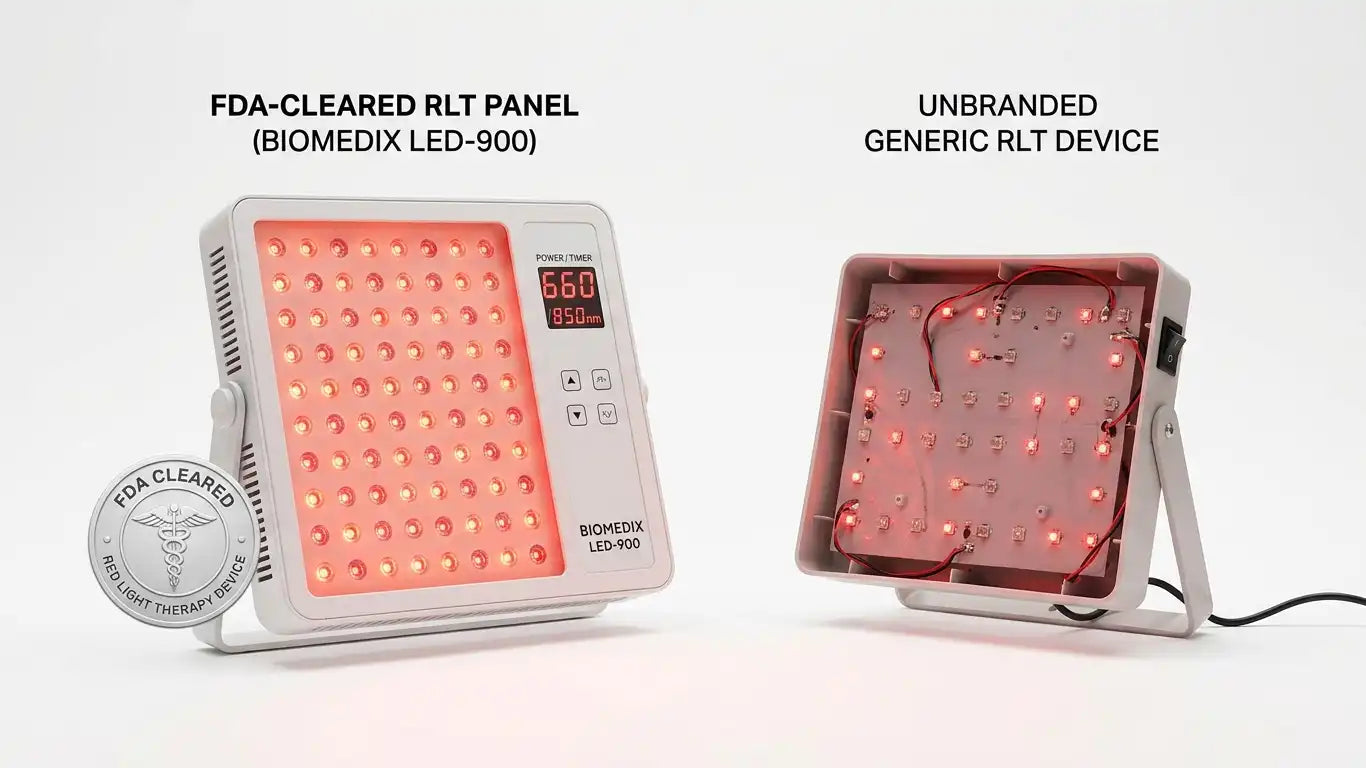
A large share of reported side effects from red light therapy trace back to the device, not the therapy itself. This is why device quality and regulatory status matter before anything else.
"FDA-Cleared" vs. "FDA-Approved" — Not the Same Thing
You'll see both terms used interchangeably in marketing. They are not interchangeable.
- FDA-cleared means the device went through the 510(k) process and was found to be substantially equivalent to an already-marketed device. It's an indication of acceptable safety, not proven effectiveness.
- FDA-approved (for medical devices specifically) involves a much more rigorous Pre-Market Approval (PMA) process with clinical trials. Most consumer RLT devices have not gone through this.
- "FDA-certified" is not a real regulatory category for devices. When you see it on packaging, it's a marketing term with no defined meaning.
You can verify whether a specific device has legitimate 510(k) clearance by searching the FDA's device database at fda.gov/medical-devices.
What Low-Quality Devices Actually Do Wrong
Cheap, unverified devices tend to have a few common problems:
- Wavelength inaccuracy — The therapeutic benefit of red light depends on hitting specific wavelengths (around 660 nm for red, 850 nm for NIR). Low-cost LEDs often drift outside these ranges, delivering less benefit at best, unpredictable tissue response at worst.
- Overstated power output — Many panels claim irradiance numbers that can't be replicated in independent testing. This makes dosing unreliable.
- Insufficient heat management — Panels that run hot increase the risk of thermal discomfort or mild burns, especially during prolonged use.
- No eye safety testing — Consumer-grade devices with no documentation on ocular safety are a specific concern for facial use.
If you're pairing your sessions with a home sauna, where heat and humidity add additional variables, device selection becomes even more important. The ICE DRAGON guide to sauna red light therapy lights covers how to evaluate panels specifically for sauna environments, including irradiance data and heat tolerance ratings.

Skin Side Effects
Skin reactions are the most commonly reported side effect of red light therapy, and they exist on a wide spectrum from entirely normal to genuinely harmful.
What's Normal
A mild, temporary flush of redness after a session is common and usually harmless. It's the result of increased local blood circulation — the same kind of redness you might get from a hot shower. It typically fades within 30–60 minutes.
Some users notice slight skin tightness or dryness immediately after a session, particularly with higher-intensity devices. This is generally minor.
What's Not Normal
The following indicate overexposure or misuse:
- Persistent redness lasting hours after a session
- Burning or stinging sensations during use
- Blistering — documented in at least one early clinical trial at high LED intensities
- Swelling or inflammation that doesn't resolve within a day
These outcomes almost always result from one of three things: using a device too close to the skin, sessions that run too long, or using a device on a setting it wasn't designed for at-home use.
The Dose-Response Problem
More is not better with red light therapy. At some point, additional exposure stops producing benefits and starts causing oxidative stress in the same cells you're trying to support. This biphasic (or hormetic) dose response is well-established in the research but rarely communicated in consumer-facing material. The practical takeaway: follow the manufacturer's recommended distance and session time, and don't double sessions to speed up results.
Common overuse patterns to avoid:
- Falling asleep during a session with a panel placed close to the body
- Running consecutive sessions on the same area without rest days
- Increasing intensity or duration because early results "feel good"
- Using a clinical-grade device with the same frequency as a lower-power home panel

Eye Safety
Eye injury is one of the few RLT risks that can be permanent. It also gets underplayed in mainstream coverage because most consumer-grade devices are unlikely to cause immediate obvious damage — and that gradual, subclinical exposure is exactly the problem.
How Red and NIR Light Affect the Eyes
The cornea and lens absorb some visible red light, but near-infrared light passes through these structures and reaches the retina. Prolonged or intense NIR exposure without protection can cause photoretinitis — inflammation or damage to the retinal cells responsible for detailed central vision. In severe cases, the result can be permanent visual impairment.
This risk is distinct from the discomfort of bright light. The retina has no pain receptors, so significant exposure can occur without any warning sensation.
Separately, individuals with certain pre-existing eye conditions face additional risks:
| Condition | Specific Concern |
|---|---|
| Macular degeneration | Light may exacerbate retinal stress in affected areas |
| Glaucoma | NIR may affect intraocular pressure (evidence limited but cautionary) |
| Cataracts (untreated) | Lens clarity affects how much light reaches the retina |
| Recent eye surgery (LASIK, cataract) | Healing tissue may respond unpredictably; consult your surgeon |
| Retinitis pigmentosa | Progressive photoreceptor degeneration makes extra caution warranted |
Why Closing Your Eyes Isn't Enough
Eyelids block visible red light reasonably well, but near-infrared wavelengths (850 nm and above) pass through closed eyelids at meaningful levels. If your device uses NIR and is positioned near your face, eyes-closed is not adequate protection.
What actually protects your eyes: opaque goggles specifically rated for the wavelengths your device emits. Standard sunglasses are not sufficient for clinical-grade devices. Most good home devices include goggles — use them even if the instructions say they're "optional."
Skin Tone and Hyperpigmentation Risk
This risk is less discussed but clinically relevant. Research consistently shows that people with darker skin tones (Fitzpatrick types IV–VI) are more sensitive to visible light, including red light, than people with lighter skin tones.
The concern is post-inflammatory hyperpigmentation (PIH): dark spots or uneven pigmentation that develop after a skin reaction. PIH can be persistent — sometimes taking months to fade — and is harder to treat than it is to prevent.
This doesn't mean darker-skinned individuals can't use red light therapy. It means starting conservatively matters more:
- Begin with lower intensity settings
- Use a greater distance from the device than the default recommendation
- Shorter initial sessions (5–8 minutes rather than 10–20 minutes)
- Monitor for any redness lasting more than an hour post-session
- Increase gradually only after confirming no adverse skin response
A second, related issue: existing hyperpigmentation or melasma may be worsened if the device generates any meaningful heat. Even non-UV devices can trigger PIH through thermal pathways rather than photochemical ones if the skin gets warm during a session.
Open Wounds and Active Infections
Red light therapy has legitimate clinical applications in wound care — but those applications happen in controlled, sterile clinical environments. At home, the same logic doesn't apply.
Why open wounds are a problem at home:
RLT encourages increased circulation and cellular activity in treated tissue. In the presence of an open wound, that increased circulation can spread bacterial contamination from the wound surface deeper into surrounding tissue. If the wound has any active infection — or if the skin is broken around an active skin condition — the result can be accelerated infection, not accelerated healing.
Similarly, applying a home device (which cannot be fully sterilized) to broken skin introduces contamination risk independent of any light-related effect.
Conditions where RLT should not be applied at home:
- Open or bleeding wounds
- Active bacterial skin infections (cellulitis, impetigo)
- Active herpes outbreaks (oral or genital)
- Severely compromised skin (post-procedure, post-peel, active eczema flares)
- Skin immediately after waxing or aggressive dermabrasion
The difference between home and clinical use here isn't the light — it's the sterilization, supervision, and clinical judgment that a professional setting provides.
Near-Infrared Penetration and Internal Tissue Risks
This is probably the least-discussed category of RLT risk, and it becomes more relevant as full-body devices and high-power panels become more common in home use.
Near-infrared wavelengths — typically 850 nm and above — penetrate tissue significantly deeper than visible red light. In controlled clinical settings, this penetration is the point: it allows light to reach muscles, joints, and deeper connective tissue. But in uncontrolled home use, that same penetration can affect structures the user didn't intend to treat.
The Thyroid
The thyroid gland sits close to the surface at the front of the neck. NIR light can reach thyroid tissue when the neck is directly in the treatment zone. For people with hyperthyroidism (overactive thyroid), this matters: there is theoretical risk that additional light stimulation could further increase thyroid hormone production. Most device manuals for full-body panels explicitly advise against positioning the device over the thyroid area.
For people on thyroid medication or with a diagnosed thyroid condition, this is worth discussing with your prescribing physician before using any full-body or neck-adjacent panel.
Full-Body vs. Targeted Use
This distinction matters for cumulative exposure. A full-body sauna unit with integrated red light panels — where you're exposed across your entire body surface — is a different risk profile than a handheld wand treating a 5 cm² area on your elbow. Total dose across body surface area increases with full-body formats, and this isn't accounted for in standard device instructions, which are written for targeted local use.
If you use a full-body format, shorter sessions and conservative intensity settings become more important, not less.

Who Should Not Use Red Light Therapy
| Category | Condition / Situation | Recommendation |
|---|---|---|
| Absolute contraindications | Active cancer in or near treatment area | Do not use without oncologist approval |
| Photosensitive epilepsy | Avoid — especially pulsed/flickering devices | |
| Direct, unprotected eye exposure | Always use rated goggles | |
| Relative contraindications (medical clearance required) | Pregnancy (abdomen / pelvic area) | Avoid; limited safety data on fetal exposure |
| Photosensitizing medications | Consult prescriber (see list below) | |
| Systemic lupus erythematosus (SLE) | Skin photosensitivity may cause reactions | |
| Hyperthyroidism | Avoid neck/upper chest treatment area | |
| Active infection or high fever | Theoretical risk of worsening systemic heat load | |
| Recent burns in treatment area | Residual thermal tissue should not be retreated | |
| Proceed with caution | Darker skin tones (Fitzpatrick IV–VI) | Start low, go slow; monitor for PIH |
| Children and adolescents | Safety data largely absent; consult pediatrician | |
| Diabetic neuropathy | Reduced sensation increases burn risk | |
| Post-surgical sites (recent) | Confirm with surgeon before exposing healing tissue | |
| Immunosuppressant medications | Limited data; consult prescribing doctor |
Common Photosensitizing Medications
The following drug classes can increase skin sensitivity to light, including visible red light. If you take any of these, discuss RLT use with your doctor or pharmacist:
- Antibiotics: tetracyclines (doxycycline, tetracycline), fluoroquinolones (ciprofloxacin)
- Acne treatments: isotretinoin (Accutane), topical retinoids (tretinoin)
- Diuretics: furosemide, hydrochlorothiazide
- NSAIDs: naproxen, ibuprofen (at higher doses)
- Antidepressants / antipsychotics: some SSRIs, phenothiazines, lithium
- Herbal supplements: St. John's Wort (significant photosensitizer)
This is not an exhaustive list. If you're on any regular medication, check its package insert for photosensitivity warnings or ask your pharmacist directly.
Summary
Red light therapy is a legitimate, broadly safe treatment when used correctly — but the qualifier "when used correctly" covers a lot of ground. The main risks aren't mysterious: they're predictable and largely preventable. Eye protection is non-negotiable, especially with NIR-emitting devices near the face. Skin side effects almost always trace back to overuse or low-quality devices rather than the therapy itself. Darker skin tones warrant extra caution around pigmentation. And several medical conditions — from active cancer to photosensitive epilepsy to hyperthyroidism — create situations where "generally safe for most people" no longer applies to you specifically. The best approach is to buy a device with legitimate FDA clearance, follow the included guidelines on distance and session length, protect your eyes, and talk to a doctor if you fall into any of the contraindicated groups. Explore the ICE DRAGON red light therapy collection for FDA-cleared devices designed for transparent, responsible home use.
FAQ
Can red light therapy damage your eyes even if they're closed?
Visible red light (630–700 nm) is largely blocked by closed eyelids under normal home-device conditions. Near-infrared wavelengths (850 nm and above), however, pass through the eyelid at measurable levels. For devices that include NIR — which includes most full-spectrum panels — closed eyes alone are not considered adequate protection. Opaque goggles rated for the specific wavelength range your device emits are the correct protection. This is especially important if you use a panel near your face or for extended sessions.
Is red light therapy safe for dark skin tones?
Red light therapy is not contraindicated for darker skin tones, but people with Fitzpatrick IV–VI skin do have a higher baseline risk of post-inflammatory hyperpigmentation (PIH) following any light-based treatment. Starting with lower intensity settings, greater device distance, and shorter session times significantly reduces this risk. If your skin shows persistent redness more than an hour after a session, that's a signal to pull back on dosage. Some dermatologists recommend a patch test on a small area before committing to full-face or full-body use.
What happens if you use red light therapy too often?
Red light therapy follows a biphasic dose-response curve: moderate, regular exposure tends to produce benefits; excessive exposure produces diminishing returns and can trigger mild oxidative stress in treated cells. Practically speaking, using a device more frequently or at higher intensity than recommended tends to cause temporary skin irritation, redness, or sensitivity rather than serious harm. That said, daily overuse for extended periods — particularly with higher-powered panels at close range — has caused skin irritation and, in rare cases, blistering. Most manufacturers recommend 3–5 sessions per week with rest days in between.
Can red light therapy cause cancer or make existing cancer worse?
Red light therapy does not cause cancer. It uses non-ionizing light that cannot damage DNA the way UV radiation does, and there is no established evidence linking RLT to cancer initiation. The more nuanced question is whether it's safe for people with existing cancer: in clinical settings, RLT has actually been studied to manage cancer treatment side effects like oral mucositis. However, applying light directly over an active tumor site is generally listed as a contraindication in device manuals, based on theoretical concern that light stimulation could promote cell proliferation in already-abnormal tissue. If you have a cancer diagnosis, consult your oncologist before using any RLT device.
Is red light therapy safe to use during pregnancy?
The honest answer is that we don't know definitively — there simply isn't adequate safety data from controlled studies involving pregnant women. Most clinical guidance errs on the side of caution and recommends avoiding red light therapy on the abdomen, pelvis, and lower back during pregnancy, where fetal exposure is plausible. Use on areas away from the abdomen (hands, face, upper back) is not as clearly contraindicated, but consulting your OB-GYN before starting any new light-based therapy during pregnancy is the right step to take.


