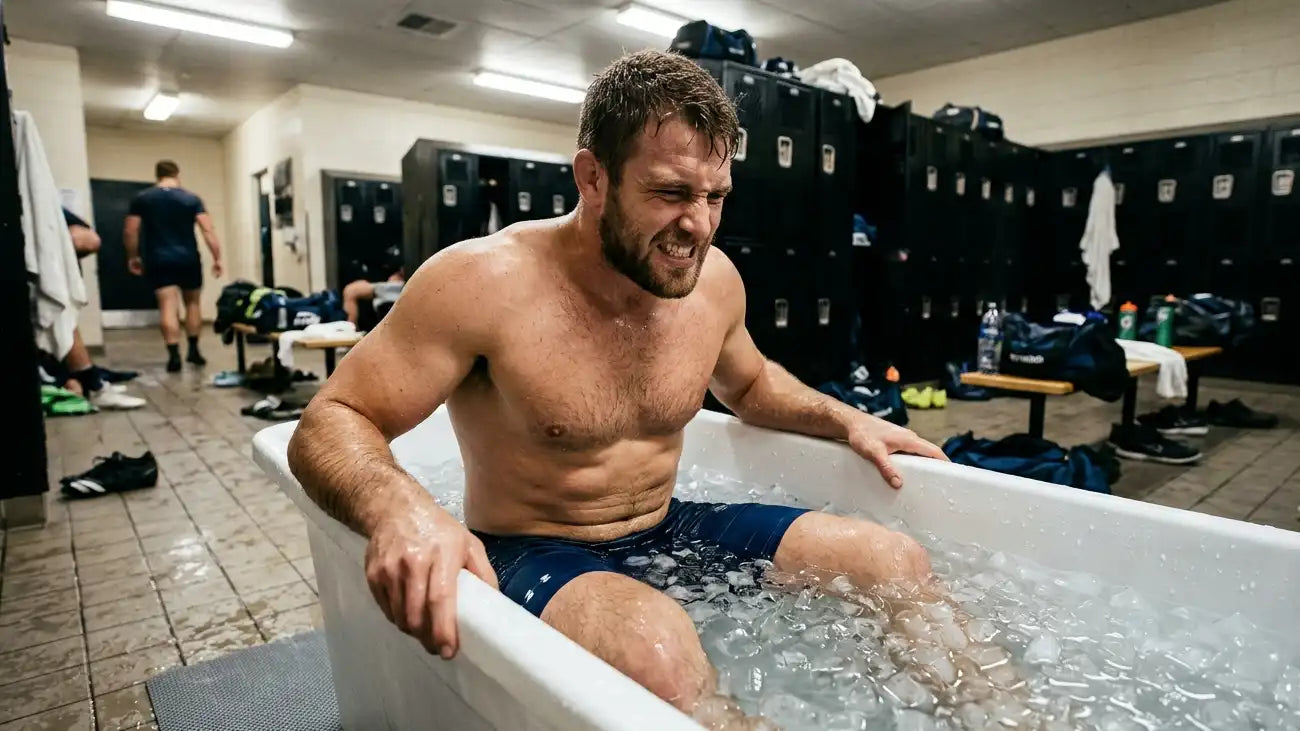
Most people assume ice baths are just something elite athletes do to show toughness. But the growing number of everyday people adding cold plunges to their routines suggests something more practical is going on. The purpose of an ice bath isn't a single thing — it's a toolkit. Depending on your goal, the same 10 minutes in cold water can speed up recovery, sharpen your focus, help you sleep, or support your metabolism. This guide breaks down each purpose clearly, so you can decide whether cold water immersion is worth adding to your own routine — and exactly how to use it.
What Is an Ice Bath and How Does It Work?
An ice bath — also called cold water immersion (CWI) or a cold plunge — involves submerging your body in water typically between 50°F and 59°F (10°C–15°C) for a set period, usually 5 to 15 minutes.
The moment you enter cold water, your body responds immediately:
- Blood vessels constrict (vasoconstriction), reducing blood flow to muscles and limiting swelling
- Nerve signals slow down, which dulls the sensation of pain
- Stress hormones spike — adrenaline and norepinephrine are released, triggering alertness
- When you get out, blood vessels dilate again, flushing nutrient-rich blood back through your tissues
This sequence of constriction and dilation is the engine behind most of the ice bath's reported benefits. Understanding it makes the purposes below much easier to follow.
Purpose 1 — To Relieve Muscle Soreness and Reduce Inflammation
This is the most common reason people reach for a cold plunge, and it has the most direct physiological explanation.
After intense exercise, small tears in muscle fibers trigger an inflammatory response. That's the source of delayed-onset muscle soreness (DOMS) — the ache you feel 24 to 48 hours after a hard workout. Cold water slows blood flow to affected areas, which limits the extent of that inflammatory response and reduces swelling in surrounding tissue.
The result is less soreness, faster return to normal function, and a body that feels ready to train again sooner.
Best for: High-intensity workouts, endurance events, back-to-back training days

Purpose 2 — To Speed Up Post-Workout Recovery
Reducing soreness and accelerating recovery are related but different goals. The first is about how you feel; the second is about how quickly your body is ready to perform again.
When you exit an ice bath, the sudden vasodilation draws fresh, oxygenated blood back into muscle tissue. This helps flush out metabolic byproducts — including lactic acid and other waste compounds — that accumulate during exercise.
One important caveat: if your goal is muscle growth, timing matters. Cold immersion used immediately after strength training may blunt the anabolic signaling that promotes muscle hypertrophy. For those focused on building size, it may be better to delay cold exposure by a few hours or reserve it for recovery days.
Best for: Endurance athletes, team sport players, anyone with frequent training schedules
| Goal | Use Ice Bath? | Best Timing |
|---|---|---|
| Reduce soreness | Yes | Within 1 hour post-workout |
| Speed up recovery | Yes | 30–60 min post-workout |
| Maximize muscle growth | Use with caution | Delay 4+ hours or skip |
| Mental reset after training | Yes | Any time post-workout |
Purpose 3 — To Strengthen the Immune System
The link between cold exposure and immunity is one of the more debated areas of cold therapy research, but the evidence leans positive for regular users.
The theory is that repeated cold exposure acts as a mild physiological stressor — what researchers call "hormesis." The body adapts to this stress by becoming more resilient, including improvements to immune cell activity. Some studies on cold water swimmers observed elevated white blood cell counts and reduced sick days compared to non-swimmers.
The key word is regular. A single cold plunge is unlikely to meaningfully boost immunity. But a consistent practice — even cold showers — may build a more responsive immune system over time.
Best for: People looking to build a long-term wellness habit, not just a one-off treatment
Recommended Products


Purpose 4 — To Support Cardiovascular Health and Circulation
Think of repeated ice bathing as passive training for your blood vessels. Each time you enter cold water, arteries and veins constrict. When you warm up, they dilate. Over time, this repeated cycle may improve vascular elasticity — the ability of blood vessels to respond flexibly to demands.
This improved circulation has downstream effects: better oxygen delivery to tissues, more efficient removal of waste products, and potentially lower resting blood pressure in healthy individuals.
Important: If you have existing heart disease, high blood pressure, or a history of arrhythmia, consult a doctor before trying cold plunges. The initial cardiovascular stress of cold immersion can be significant.

Purpose 5 — To Boost Metabolism and Support Weight Management
Cold water forces your body to work harder to maintain core temperature. One mechanism involves brown adipose tissue (BAT) — a type of fat that burns calories to generate heat, as opposed to white fat which simply stores energy.
Regular cold exposure can activate and expand BAT, slightly elevating your resting metabolic rate. There's also a short-term calorie burn as your body shivers and thermogenically responds to the cold.
That said, the realistic contribution to weight loss is modest. Ice baths are better framed as a supportive tool — useful alongside proper nutrition and exercise — rather than a standalone fat-loss strategy.
Best for: People already active who want to add a metabolic edge to their routine
Purpose 6 — To Improve Sleep Quality
This purpose often surprises people. The mechanism works through body temperature regulation: your core body temperature naturally drops as you approach sleep, signaling the brain to release melatonin and initiate sleep cycles. A cold plunge in the evening accelerates that temperature drop, which may help you fall asleep faster and sleep more deeply.
Cold immersion also lowers cortisol — the body's primary stress hormone. Elevated cortisol in the evening is a common cause of restless sleep. By blunting it, an evening ice bath can create better conditions for rest.
Timing note: An ice bath 1–2 hours before bed tends to work better than one immediately before sleep, giving your body time to settle into a calm state.

Purpose 7 — To Enhance Mood, Mental Clarity, and Resilience
This is the purpose that has driven the broadest cultural adoption of cold plunging — well beyond the athletic community.
When you enter cold water, your brain floods with dopamine and norepinephrine. These neurochemicals are associated with motivation, focus, and sustained mood elevation. The effect isn't just a brief rush — studies show dopamine levels can remain elevated for hours after a cold plunge.
Beyond chemistry, there's a psychological dimension. Choosing to sit in cold water when every instinct tells you to get out is a form of deliberate discomfort. Over time, this builds mental discipline that carries over into other areas — the ability to stay calm under pressure, push through difficulty, and regulate your stress response.
Many people describe the post-plunge state as one of the clearest-headed, most focused experiences in their day.
Best for: Anyone dealing with chronic stress, low motivation, or looking to build mental toughness
How to Match Your Purpose to the Right Ice Bath Protocol
The way you use an ice bath should match what you're trying to achieve. Temperature, duration, and timing all affect the outcome.
| Purpose | Recommended Temp | Duration | Best Timing |
|---|---|---|---|
| Muscle soreness relief | 50–59°F (10–15°C) | 10–15 min | Within 1 hour post-workout |
| Post-workout recovery | 50–59°F (10–15°C) | 10–15 min | 30–60 min post-workout |
| Immune system support | 54–59°F (12–15°C) | 5–10 min | Morning, daily |
| Cardiovascular health | 54–59°F (12–15°C) | 10–15 min | Any time |
| Metabolism / weight support | 50–57°F (10–14°C) | 10–15 min | Morning or post-exercise |
| Sleep improvement | 55–59°F (13–15°C) | 5–10 min | 1–2 hours before bed |
| Mood & mental clarity | 46–54°F (8–12°C) | 2–5 min | Morning or pre-focus work |
Getting started doesn't require expensive equipment. The IceDragon Portable Cold Plunge Tub assembles in under 10 minutes and can be set up anywhere — backyard, garage, or indoors. For more consistent temperature control without hauling ice daily, a dedicated water chiller lets you dial in your preferred temperature and maintain it across sessions.
Who Should and Shouldn't Use Ice Baths
Good candidates:
- Healthy adults with regular exercise routines
- Endurance athletes managing training load
- People dealing with chronic stress or poor sleep
- Anyone building a long-term wellness habit
Use caution or consult a doctor first if you have:
- Heart disease, arrhythmia, or high blood pressure
- Peripheral artery disease or poor circulation
- Raynaud's phenomenon or cold urticaria
- Respiratory conditions such as asthma triggered by cold
- Pregnancy

Universal safety guidelines:
- Never plunge alone the first few times
- Start warmer (59°F / 15°C) and work your way down
- Exit if you feel dizzy, confused, or begin shivering uncontrollably
- Don't jump straight into a hot shower afterward — warm up gradually with movement
- Avoid alcohol before or after cold immersion
Summary
The purpose of an ice bath isn't one-size-fits-all. Depending on what you need, cold water immersion can function as a recovery tool, a mood regulator, a sleep aid, a metabolic nudge, or a daily mental challenge. The science behind each purpose is solid enough to be worth trying — though results vary by person, consistency, and how well the protocol matches the goal. Start conservatively, stay consistent, and use the protocol table above to match your approach to your actual objective.
FAQ
What is the purpose of an ice bath after a workout?
The main post-workout purpose is to reduce muscle soreness and accelerate recovery. Cold water limits the inflammatory response in damaged muscle tissue, helping you feel ready to train again sooner. For muscle-building goals, it's worth delaying cold exposure by a few hours to avoid interfering with the body's repair and growth signals.
How long should you stay in an ice bath to get the benefits?
For most purposes, 5 to 15 minutes is the effective range. Shorter sessions (2–5 minutes) are enough for mood and mental clarity benefits. Longer sessions up to 15 minutes are more appropriate for muscle recovery. Staying beyond 15–20 minutes increases the risk of hypothermia with little added benefit.
Can ice baths help with weight loss?
Ice baths can provide a modest metabolic boost by activating brown fat and forcing your body to generate heat. However, the calorie burn is relatively small. Cold plunges are best viewed as a supportive addition to an active lifestyle and healthy diet, not a primary weight loss tool.
What is the purpose of an ice bath for mental health?
Cold immersion triggers a significant release of dopamine and norepinephrine — neurochemicals linked to mood, focus, and stress regulation. Regular cold plunging has been associated with reduced anxiety, better stress tolerance, and improved mood. The discipline of staying in uncomfortable conditions also builds mental resilience over time.
How often should you take an ice bath to see results?
For recovery purposes, 2–4 times per week after intense sessions is a common approach. For immune support, sleep improvement, or mental health benefits, daily cold exposure — even a 2–5 minute cold shower — appears sufficient. Consistency matters more than frequency; a sustainable routine will outperform occasional intense sessions.


