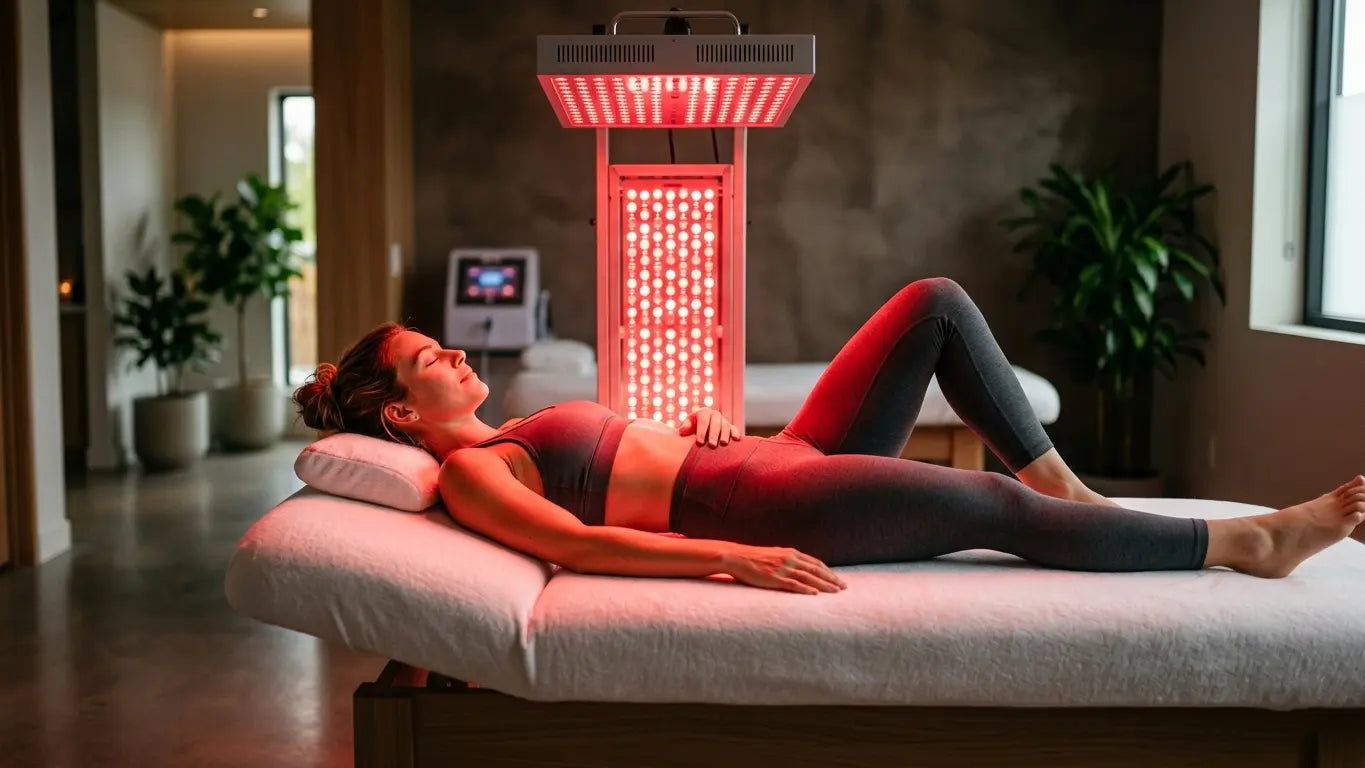
You've probably seen the sleek red-glowing panels at wellness studios, or the wrap-around blankets marketed as the lazy person's shortcut to a slimmer waist. Red light therapy for weight loss is everywhere right now — and the claims range from credible to outright absurd. The honest answer sits somewhere in the middle. This is not a miracle fat-melting machine, but it's also not pure hype. When you understand what's actually happening at the cellular level, you can decide whether it fits your goals — and stop wasting money on misplaced expectations.
What Happens to Fat Cells During Red Light Therapy
Before diving into mechanisms, it helps to understand what red light therapy is actually doing to your fat cells — because the effect is more specific (and more temporary) than most people realize.
Fat cells, called adipocytes, store energy in the form of triglycerides. When specific wavelengths of red and near-infrared light penetrate the skin and reach these cells, something unusual happens: the fat cell membrane temporarily becomes more permeable. Tiny pores open up, and the stored contents — fatty acids and triglycerides — leak out into the space between cells.
From there, your lymphatic system and bloodstream pick up these released fats and either use them for energy or process them through the liver.
Here's the critical part most marketing skips over: the fat cells themselves are not destroyed. They shrink, but they stay intact. This means if you return to the habits that caused fat accumulation in the first place, those same cells will refill. Red light therapy creates an opening — it doesn't close the door on fat permanently.

How Red Light Therapy Actually Works
Red and near-infrared light sit in a specific range of the electromagnetic spectrum — roughly 630 to 1,100 nanometers (nm). This range is sometimes called the "therapeutic window" because it can penetrate biological tissue without causing thermal damage.
When this light reaches cells, the primary target is the mitochondria — specifically an enzyme called cytochrome c oxidase. This enzyme absorbs the light energy and uses it to boost ATP (adenosine triphosphate) production. ATP is the cell's energy currency. More ATP means faster, more efficient cellular metabolism.
In fat tissue, this metabolic stimulation appears to trigger a cascade:
- Increased membrane permeability in adipocytes (fat cell pores)
- Enhanced lipid mobilization (fat is released from storage)
- Reduced oxidative stress at the cellular level
- Improved local blood flow, which helps clear the released fats
Wavelengths matter. Red light (630–700 nm) works primarily on surface tissue — skin and shallow subcutaneous fat. Near-infrared light (800–1,100 nm) penetrates deeper, reaching muscle tissue and, in some areas, visceral fat layers. This is why devices that combine both wavelengths — like the Icedragon Red Light Therapy Blanket with its 660 nm and 850 nm dual-wavelength design — are generally considered more versatile for body-focused use.

Benefits and Realistic Outcomes
Results from clinical studies on red light therapy and body measurements are genuinely interesting — but they're easy to misread.
Most studies focus on circumference reduction, not weight on a scale. In one frequently cited randomized trial involving 67 participants, six sessions over two weeks produced an average combined reduction of about 3.5 inches (roughly 8.9 cm) across the waist, hips, and thighs compared to the placebo group. Another six-week pilot study found an average 0.8-inch (2 cm) reduction in waist circumference after twice-weekly sessions.
These are real, measurable changes. But context matters:
- Most studies are short-term, with limited follow-up
- Sample sizes are small — 40 to 90 people is typical
- Few studies track whether results last beyond the treatment period
- Results vary significantly depending on device power, wavelength, and protocol
Additional benefits that appear consistently across the research:
- Reduced post-exercise muscle soreness and faster recovery
- Decreased markers of systemic inflammation
- Improved insulin sensitivity when combined with exercise
- Better sleep quality, which indirectly supports weight management
- Modest skin tightening from collagen stimulation
None of these secondary benefits are trivial — especially recovery support, which allows people to train more consistently. That cumulative training effect often matters more for long-term weight management than the direct fat-reduction effect of the light itself.
Targeting Belly Fat and Stubborn Areas
The abdomen, hips, and thighs are the most common treatment targets — and not by accident. These areas tend to carry more subcutaneous fat (the kind that sits just beneath the skin), which is more accessible to light than visceral fat (the deeper fat around organs).
Subcutaneous fat responds reasonably well to red and near-infrared light, particularly at clinical-grade power densities. Studies consistently show circumference reductions in these areas.
Visceral fat is a different story. Reaching it requires stronger near-infrared wavelengths and significantly more energy delivery. Some practitioners argue that systemic metabolic improvements from red light therapy can gradually affect visceral fat when paired with diet and exercise, but direct evidence for this is thin.
For people targeting belly fat specifically, a few practical realities apply:
- The waist and abdomen show the most consistent results in published studies
- Results are proportional to treatment frequency, power, and how close the device is to the skin
- Full-contact devices (blankets, mats, wraps) tend to outperform panel-at-a-distance setups for body contouring, because irradiance drops sharply with distance
The Icedragon Red Infrared Light Therapy Mat is one option designed for close-contact use, covering larger body areas including the abdomen and lower back.

Why the Scale Often Won't Move
One of the most common points of confusion around red light therapy for weight loss is the expectation that the bathroom scale will change.
It usually won't — at least not directly.
Here's why: red light therapy causes fat cells to release their stored contents. But unless those released fats are burned through physical activity or metabolized through a caloric deficit, they can be reabsorbed and stored again. The fat isn't eliminated from your body — it's temporarily displaced.
What changes more reliably is body shape and circumference. Shrunken fat cells occupy less volume, so the treated areas look and measure smaller even when the scale shows the same number.
This distinction matters practically:
| Measurement | Typical Change with RLT | Why |
|---|---|---|
| Body weight (scale) | Minimal or none | Fat cells shrink, not disappear |
| Waist circumference | 1–3 cm reduction per treatment course | Volume reduction in subcutaneous fat |
| Hip/thigh circumference | Similar modest reductions | Same mechanism |
| Body fat percentage | Slight reduction possible | More significant when combined with exercise |
| Skin firmness | Gradual improvement | Collagen stimulation |
The most useful way to track results is with a flexible tape measure, not a scale. Measuring the waist, hips, and thighs before starting and every two weeks gives a far more accurate picture of what's happening.
Hormones, Hunger, and the Cortisol Connection
Weight management is not just about fat cells — it's about the hormonal environment that determines where fat goes and whether you feel hungry enough to eat more of it back.
Red light therapy appears to influence several hormones relevant to weight, though most of the evidence here is indirect or preliminary.
Cortisol and stress fat. Chronic elevation of the stress hormone cortisol is one of the most reliable drivers of abdominal fat accumulation. It shifts the body into a storage-favoring state and promotes fat deposition around the midsection. There's some evidence that red light therapy promotes cellular relaxation and reduces oxidative stress — which may, over time, help lower the baseline cortisol burden. This is not a dramatic or fast effect, but it may support a more favorable metabolic environment.
Leptin and ghrelin. These two hormones act as the body's hunger regulators. Leptin signals fullness; ghrelin signals hunger. Sleep deprivation disrupts both, increasing appetite and slowing metabolism. Since red light therapy appears to improve sleep quality in some users — particularly when used in the evening — there may be a secondary benefit to appetite regulation through better sleep.
Thyroid function. The thyroid gland governs basal metabolic rate. Suboptimal thyroid function is a surprisingly common contributor to weight gain that resists diet and exercise. Some early research suggests that red and near-infrared light can reduce the autoimmune activity associated with Hashimoto's thyroiditis, potentially supporting more normal thyroid output. This is one of the more intriguing potential benefits, but it applies specifically to people with thyroid dysfunction — not to the general population.

Does It Actually Work?
This is the question that cuts through the wellness noise.
The skeptical view — held by some researchers and most mainstream medical institutions — is that the evidence base is too small, too short-term, and too inconsistent to draw firm conclusions. Studies that show impressive results often lack control groups, use proprietary devices, or have commercial backing. The FDA has cleared certain devices for body contouring as class II medical devices, but clearance is not the same as proof of efficacy for weight loss.
The more optimistic view, supported by practitioners who use these tools clinically, is that the mechanism is biologically plausible, the safety profile is excellent, the short-term results are measurable, and the treatment works well as part of a broader wellness protocol.
Both views contain truth.
What seems fair to say:
- Red light therapy produces real, measurable circumference reductions in clinical settings
- These results are modest by most definitions — not dramatic transformations
- The effects appear to be temporary without lifestyle support
- The treatment is genuinely low-risk when devices are used correctly
- It works noticeably better when combined with consistent exercise and reasonable nutrition
The honest framing is this: red light therapy for weight loss is a supportive tool, not a solution. If you already have solid lifestyle habits and want to accelerate body contouring results, it may offer meaningful benefits. If you're hoping to use it in place of diet and exercise, you'll be disappointed.
Red Light Therapy vs Other Fat Reduction Methods
It's worth understanding how red light therapy fits within the broader landscape of non-surgical fat reduction, especially since clinics often position these options as alternatives to each other.
| Feature | Red Light Therapy | CoolSculpting | Liposuction | Radiofrequency |
|---|---|---|---|---|
| Invasive? | No | No | Yes (surgical) | No |
| Fat cell outcome | Shrinks (reversible) | Destroys (permanent) | Removes (permanent) | Remodels |
| Downtime | None | Several weeks' discomfort | Weeks | Minimal |
| Results timeline | 4–8 weeks of sessions | 2–4 months after treatment | Immediate, full results at 6 weeks | 2–4 months |
| Cost per session | Low–medium | High | Very high (per area) | Medium |
| Skin benefit | Yes (collagen) | Minimal | None | Yes (tightening) |
| Reversibility concern | Fat returns if cells refill | Treated area permanent | Treated area permanent | Moderate |
| Best suited for | Gradual shaping, recovery | Localized stubborn fat | Large volume removal | Skin laxity + fat |
The clearest practical distinction is permanence. CoolSculpting and liposuction destroy or remove fat cells — once they're gone, that area has fewer cells to store fat. Red light therapy doesn't remove cells, which means maintenance is required and lifestyle habits matter more.
CoolSculpting also carries a rare but real complication called paradoxical adipose hyperplasia, where the treated area hardens and expands instead of shrinking. This doesn't happen with red light therapy.
For people who want gradual, whole-body shaping without downtime or significant cost per session — and who are willing to do multiple sessions over weeks — red light therapy is a reasonable fit. For people who want a defined area of fat removed more permanently with fewer sessions, CoolSculpting or a similar approach may be more appropriate.
If you're exploring at-home options, the Icedragon Red Light Therapy Panel Pro offers clinic-adjacent power density for home use — a meaningful consideration given that device output is one of the biggest variables in outcomes.
Who Should Use It — and Who Should Think Twice
Red light therapy has a genuinely good safety profile. It uses no UV radiation, involves no heat, breaks no skin, and has no significant known drug interactions for most people. That said, it's not appropriate for everyone.
Good candidates:
- Adults who already exercise regularly and eat reasonably well, looking to support body shaping
- People with localized fat deposits resistant to diet and exercise
- Those with elevated inflammation, slow recovery from workouts, or mild sleep issues
- Anyone seeking a non-invasive complement to an existing wellness routine
- People with suspected thyroid dysfunction (worth discussing with a doctor)
Proceed with caution or consult a doctor first:
- Individuals taking photosensitizing medications (certain antibiotics, retinoids, NSAIDs)
- People with active autoimmune skin conditions affecting the treatment area
- Anyone with a history of photosensitivity reactions
- Those with active cancer — light therapy in oncology settings requires medical supervision
Avoid treatment over:
- Open wounds, active infections, or recent surgical sites
- Areas affected by active skin conditions like psoriasis flares
- Directly over the eyes without protective goggles (this applies to all users — always wear the goggles)
- The abdomen during pregnancy
One underappreciated consideration: device quality matters more than most people realize. Consumer-grade panels vary enormously in actual output power. A cheap device that emits too little energy simply won't produce meaningful results. If considering a home device, look for products with verified irradiance specifications (ideally 60–120 mW/cm² at the skin surface) and FDA clearance or registration. The Icedragon Red Light Therapy collection includes options across different form factors — panels, mats, and the full-body blanket — with 660 nm and 850 nm dual-wavelength output.
Summary
Red light therapy for weight loss works, within specific and honest limits. The strongest evidence supports modest circumference reduction — particularly around the waist, hips, and thighs — after multiple sessions of consistent treatment. The mechanism involves temporary fat cell membrane permeability, ATP-driven metabolic stimulation, and downstream effects on inflammation and circulation. What it doesn't do is permanently remove fat cells, replace caloric balance, or produce dramatic scale-weight loss on its own. Used as a complement to regular exercise and sensible eating, it can meaningfully support body shaping, speed up muscle recovery, and may provide secondary benefits around sleep and hormonal balance. The technology is safe, non-invasive, and — with the right device — accessible at home. Approach it as a tool that amplifies what you're already doing, not one that does the work for you.
FAQ
Does red light therapy work for weight loss without exercise?
The short answer is: somewhat, but not enough to be a standalone strategy. Studies show measurable inch loss even without changes to exercise or diet, but the released fat can be reabsorbed without physical activity to burn it. Exercise significantly amplifies results and helps maintain them.
How many red light therapy sessions do you need to see results for fat loss?
Most clinical protocols involve 2–3 sessions per week over 4–8 weeks. Visible circumference reductions are typically reported after 3–6 weeks of consistent treatment. Maintenance sessions — once or twice a week — are generally needed to preserve results long-term.
Can red light therapy reduce visceral fat (deep belly fat)?
This is an area where the evidence is genuinely limited. Red light reaches subcutaneous fat (just under the skin) quite effectively. Visceral fat — the deeper fat around organs — is harder to target directly. Systemic metabolic improvements from RLT may support visceral fat reduction indirectly when combined with lifestyle changes, but there's no strong direct evidence for this yet.
Is a red light therapy blanket or mat better than a panel for body contouring?
For body contouring specifically, close-contact devices like blankets and mats have an advantage because they maintain consistent proximity to the skin, ensuring higher light delivery to target tissue. Panels require the user to position themselves at the correct distance, and output drops with distance. For areas like the abdomen, a full-body blanket such as the Icedragon Red Light Therapy Blanket provides broad, even coverage without worrying about distance calibration.
Can red light therapy help with weight loss caused by thyroid problems?
Possibly, and this is one of the more promising lines of research. Near-infrared light has shown some ability to reduce autoimmune inflammation in thyroid tissue, which may support more normal thyroid function in people with conditions like Hashimoto's. If thyroid dysfunction is contributing to your weight gain, this is worth discussing with your doctor — but RLT should be used as a complement to proper medical treatment, not a replacement.


