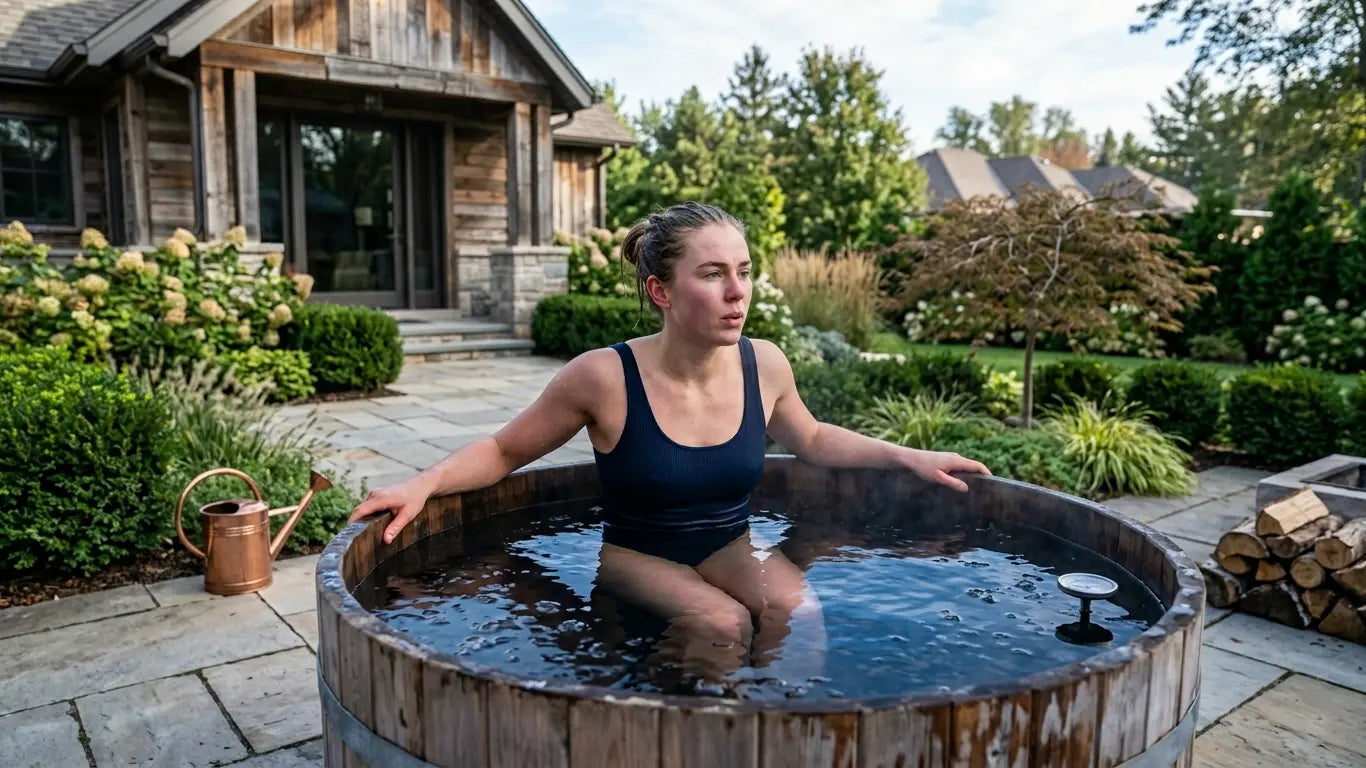
Cold plunging looks simple (get in cold water, get out), but the details matter—especially the question you’re asking:
How often should you cold plunge?
For most beginners, the best answer isn’t “daily” or “once a week.” It’s a range that depends on three things: how cold the water is, how long you stay in, and how well you recover.

This guide gives you:
- a pick-your-path frequency recommendation
- a beginner-safe baseline for temperature and time
- a simple 4-week ramp plan
- a setup checklist so the habit is easy to stick with
Medical note: This article is for general information, not medical advice. If you have cardiovascular risk factors or a medical condition—or you’re pregnant—talk with a qualified clinician before trying cold plunges.
Quick answer: your starting cold plunge frequency (pick one)
If you’re new and generally healthy, start here.
Option A (most beginners): 2–3 times per week
Choose this if you want a sustainable routine and you’re not sure how your body will react. It’s frequent enough to build familiarity without turning every day into a willpower battle.
Option B (cautious starter): 1–2 times per week
Choose this if you’re sensitive to cold, you dread the idea, or your sleep/recovery is already borderline. You’ll still make progress—just with fewer “bad sessions.”
Option C (advanced habit-builder): 4–6 times per week
Choose this only after a couple of weeks of smooth sessions (no lingering shakiness, headaches, or sleep disruption). More is not automatically better.
Option D (possible, but not required): daily
Some sources say daily cold plunging can be done, but it’s not a beginner requirement—and it can be the fastest way to overdo it.
If you want daily exposure, a smarter approach is to mix:
- 2–4 true cold plunges per week, plus
- 2–3 “easy” cold showers or shorter, warmer sessions

The 3 dials that matter (and why frequency alone is a trap)
When people say “I cold plunge 5x/week,” that number is meaningless without the other two dials:
- Temperature (how cold the water is)
- Time (how long you stay in)
- Frequency (how often you repeat it)
You can make almost any frequency safe or unsafe by cranking the other dials too hard.
Here’s the practical takeaway:
- If you go colder, you typically need shorter time and/or less frequency.
- If you go longer, you generally need warmer water and/or less frequency.
- If you go more often, you usually need easier sessions (warmer or shorter) so recovery stays good.
A beginner-safe baseline (time + temperature)
If you want one clean starting point, use this.
Temperature: start “cold,” not “extreme”
A common beginner-friendly range is 50–59°F (10–15°C), with a gradual approach if needed. Cleveland Clinic emphasizes easing in and includes practical guardrails for temperature, time, and who should avoid cold plunges (Cleveland Clinic, “The Benefits and Risks of Cold Plunges” (2024)).
If you don’t have a way to measure temperature, start with a normal cold bath/shower and progressively make it colder over time.
Time: keep it short, especially early
A typical progression is to start very short and build.
Mayo Clinic Health System describes a common ramp from 30–60 seconds toward 5–10 minutes as tolerance improves, and notes daily plunging is possible—but daily plunges after training may compromise long-term performance improvements in some contexts (Mayo Clinic Health System, “Cold plunge after workouts” (2024)).
A simple starter rule:
- Week 1: 30–90 seconds
- Week 2: 1–2 minutes
- Weeks 3–4: 2–4 minutes (only if you’re tolerating it well)
⚠️ Warning: If your breathing never settles, you feel lightheaded, you get chest discomfort, or your fingers/toes change color—get out. WebMD lists these as red flags and emphasizes not overdoing exposure time.
Recommended Products


How often should you cold plunge (by goal)?
This is the decision section. Pick the goal that actually matches your life.
If your goal is general wellness (best beginner default)
Start: 2–3x/week
Why this works: it builds consistency without forcing you to negotiate with yourself every morning.
Good signs you can keep this pace:
- you sleep normally the night of the plunge
- you feel “reset” within an hour or two (not wiped out)
- you don’t dread the next session
Signs to reduce cold plunge frequency:
- your sleep gets worse
- you feel irritable or run-down
- you start chasing colder temps to “feel something”
If your goal is stress resilience / mood
Start: 2–4x/week with shorter sessions
The “dose” that matters here is repeat exposure—not heroic duration. Keep sessions easy enough that your nervous system doesn’t feel wrecked afterward.
If every session feels like a fight, reduce the dial.
If your goal is soreness/recovery after workouts
Start: 1–3x/week, and don’t force it after every training day
Cold water immersion is often used post-exercise to reduce soreness, but it isn’t automatically the right move after every lift.
If you lift heavy and you’re training for strength or muscle gain, a conservative approach is:
- use cold plunges for select sessions (hardest days, travel weeks, competition week)
- skip it when your priority is adaptation from training
This is where people commonly overshoot ice bath frequency.

The 4-week beginner ramp plan (simple, realistic)
This isn’t the only way to do it—but it’s a good way to start without overthinking.
Week 1: 2 sessions
- Temperature: “cold but tolerable” (you can speak in full sentences)
- Time: 30–60 seconds
- Goal: practice calm breathing + safe exits
Week 2: 3 sessions
- Temperature: same or slightly colder
- Time: 60–90 seconds
- Goal: breathing settles within ~30 seconds; you feel normal shortly after
Week 3: 3 sessions
- Temperature: aim toward the commonly cited beginner range (around 50–59°F / 10–15°C if you can measure it)
- Time: 90 seconds–2 minutes
- Goal: no lingering fatigue; sleep stays normal
Week 4: choose your “maintenance” track
Pick one track:
Track 1 (most people): 3x/week
- Time: 2–4 minutes
- Temperature: stable (don’t keep chasing colder)
Track 2 (more frequent): 4–5x/week
- Keep 2 sessions “real” (colder/longer)
- Make the others “easy” (warmer or shorter)
Track 3 (low frequency): 1–2x/week
- If you love it, you can still get value
- Focus on consistency and safe technique
If you want a simple rule for your cold plunge protocol: change only one dial per week (time or temperature or frequency).

Safety first: who should skip cold plunges (or get medical clearance)
Cold exposure creates a strong stress response in the body. For some people, that’s not a good trade.
Cleveland Clinic advises talking to a healthcare professional before cold plunges—especially if you have conditions like heart disease, high blood pressure, diabetes, poor circulation, neuropathy, or certain cold-related blood disorders.
WebMD also lists similar contraindications and warns about cold shock and hypothermia risk.
Practical “stop immediately” signals
Get out if you notice:
- chest pain/discomfort
- dizziness or feeling faint
- breathing that stays uncontrolled
- confusion/panic
- numbness that makes it hard to move safely
Simple rules that prevent most bad outcomes
- Don’t plunge alone if you’re new.
- Avoid open water with current/ice risk.
- Keep your head above water.
- Have towels + warm clothing ready.
- Warm up gradually afterward (don’t shock yourself with extreme heat).
Setup checklist: make your protocol easy to follow
Frequency is easier when the setup isn’t a whole project.

Step 1: pick your “container”
Options (from simplest to most committed):
- bathtub + ice
- portable tub (small space, easy storage)
- dedicated plunge tub
If you want to browse options and get a sense of what’s out there, start with Ice Dragon Club ice bath products.
Step 2: decide how you’ll keep water cold
- Ice method: lower upfront cost, higher ongoing hassle.
- Chiller method: higher upfront cost, easier day-to-day consistency.
If your biggest barrier is “I’ll do it… once I have enough ice,” a chiller can remove friction. One example is the IceDragon Cold Plunge Tub Pro Smart Water Chiller.
Step 3: plan for hygiene (so you’ll actually keep using it)
A simple beginner standard:
- keep the water clean
- keep the tub covered when not in use
- rinse off before you get in (reduces skin oils in the water)
Step 4: choose your “timer + thermometer” habit
Two cheap tools make your routine safer and more consistent:
- a basic thermometer (or a tub with temperature control)
- a timer you can see without checking your phone
This is where many people accidentally drift into very cold water without realizing their cold plunge temperature has dropped over time.
Small-space option
If you’re tight on space or want something you can put away, a portable tub can be easier to commit to. Example: IceDragon Pod Pro Ice Bath.
FAQs
Is it okay to cold plunge every day?
It can be, but it’s not required—and it’s easy to overdo as a beginner. If daily is your goal, keep most sessions easy.
How cold should the water be for beginners?
Many beginner-friendly protocols sit around 50–59°F (10–15°C), with the idea that you start warmer if needed and work down gradually.
How long should a beginner stay in?
Start with 30–60 seconds and build toward a few minutes as your tolerance improves. If you feel worse after sessions (sleep, mood, recovery), reduce time before you reduce temperature.
That’s the simplest answer to how long to cold plunge when you’re just starting: short enough that you leave feeling steady, not wrecked.
Is there “proof” that one frequency is best?
Not really. Evidence exists, but protocols vary a lot across studies—temperature, time, and frequency aren’t standardized. A 2025 systematic review highlights that variability, which is why individual tolerance and safety matter more than chasing a single magic number.


